

Artificial intelligence is now part of everyday life. It is built into smartphones, search engines, navigation apps, online stores, healthcare tools, and workplace software.
In many cases, AI works in the background. It helps process information, find useful data, automate routine tasks, and improve digital services.
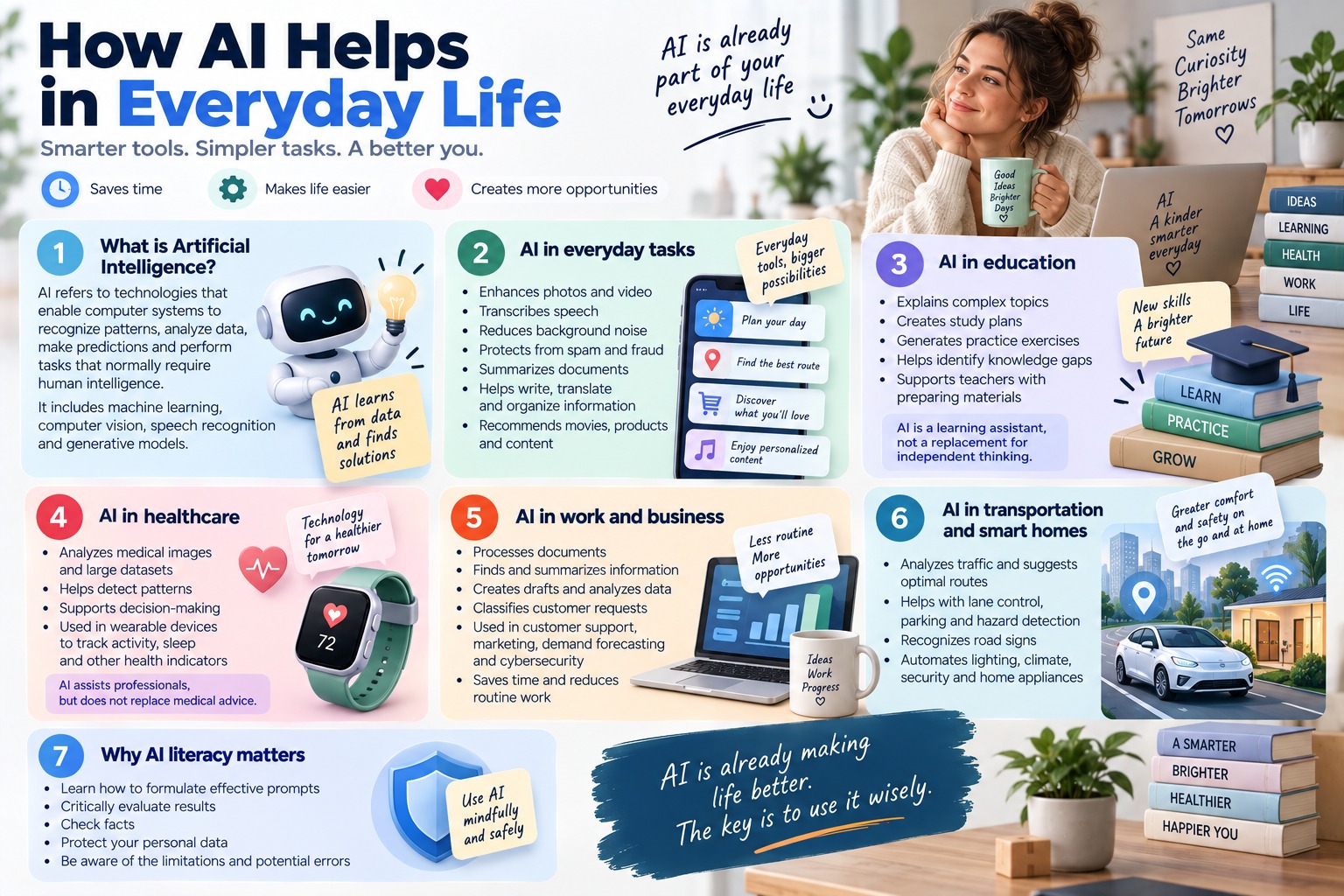
What artificial intelligence is
Artificial intelligence is a broad term for technologies that allow computer systems to work with information in advanced ways.
AI systems can find patterns, analyze data, make predictions, and complete tasks that usually require human input.
The field includes machine learning, computer vision, speech recognition, natural language processing, and generative AI.
Common examples include spam filters, face recognition, predictive text, product recommendations, automatic translation, and route planning.
AI in everyday tasks
Smartphones use AI for many common features. These include photo improvement, speech-to-text tools, noise reduction, battery management, and spam detection.
Generative AI tools can summarize documents, create drafts, explain difficult topics, translate text, and organize information.
AI is also widely used in online services. Platforms can study past activity and preferences to suggest content, products, or services.
This type of system is common in streaming platforms, online stores, search engines, news apps, and social media.
AI in education
AI is becoming a common support tool in education.
It can explain difficult topics, create study plans, generate practice tasks, and give feedback. It can also help identify areas that need more attention.
For teachers, AI can help prepare lessons, organize course materials, and handle some routine tasks.
AI-generated answers should not replace learning. The main value comes from explanation, practice, research, and review.
Independent thinking is still important.
AI in healthcare
AI is used in healthcare to analyze data and support medical work.
Some systems help review medical images, monitor patients, process health records, and identify patterns in large datasets.
Wearable devices also use AI. Fitness trackers and health apps can monitor activity, sleep, heart rate, and other health data.
AI is still a support tool in medicine. It does not replace professional medical judgment.
Automated results can be wrong or incomplete. Medical decisions still require careful review by qualified professionals.
AI at work and in business
AI is now used in many workplace tools.
It can help process documents, search for information, prepare drafts, analyze spreadsheets, summarize meetings, and organize data.
Businesses also use AI in customer support, marketing, fraud detection, cybersecurity, logistics, and demand planning.
One of the main benefits is time savings.
Routine work can often be completed faster. This can reduce the amount of repetitive work and free up time for tasks that require judgment, creativity, or specialist knowledge.

AI in transportation and smart homes
Navigation apps use AI to study traffic data, estimate travel times, and suggest routes.
Many modern vehicles also use AI-based driver-assistance features.
These systems can help with parking, lane control, traffic-sign recognition, collision warnings, and other safety functions.
AI is also common in smart homes.
It can help control lighting, heating, cooling, security systems, and household devices. These systems can work with schedules, sensors, and set rules.
Why AI literacy matters
As AI becomes more common, it is important to understand how to use it safely and effectively.
AI systems can make mistakes. They can produce false information, miss important details, or give answers based on incomplete data.
For this reason, AI results should be checked before they are trusted.
Useful skills include writing clear prompts, checking facts, reviewing sources, and protecting personal or sensitive information.
Artificial intelligence is becoming a normal part of the digital world.
Its value is most clear when it saves time, helps process information, and reduces repetitive work.