

Business stability depends more and more on digital systems. Reliable data, secure infrastructure, and fast access to information help companies cut costs, work faster, reduce risks, and make better decisions.
Modern information technology in business includes many types of tools. These can include accounting software, business databases, analytics platforms, cloud services, and automation systems.
Problems appear when these tools do not work well together. Files may be copied several times. Staff may need to enter the same data in different systems. Old software may stay in use for years. As a result, technology can create extra costs instead of reducing them.
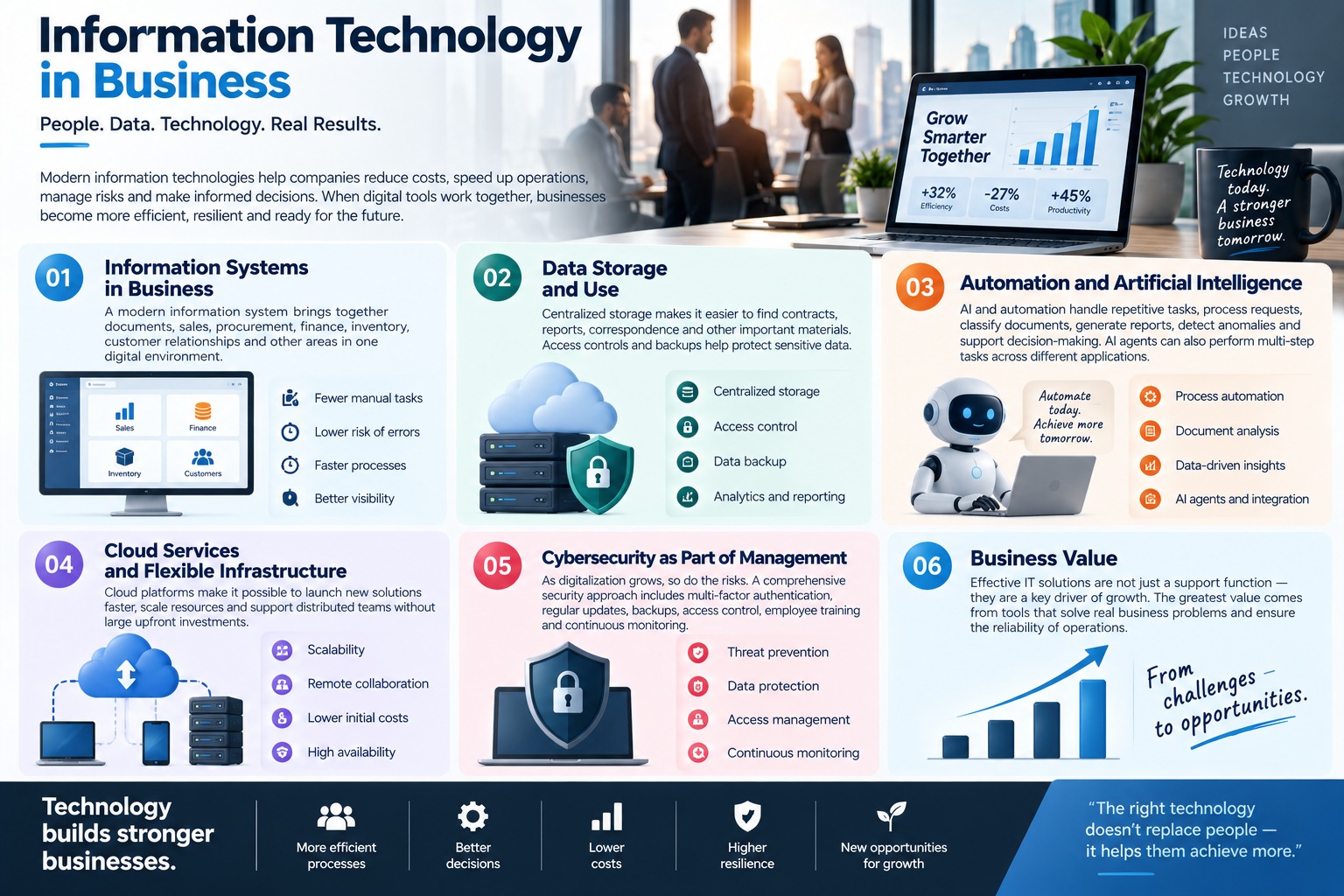
Information systems and technology in business
A modern information system can connect sales, finance, purchasing, inventory, documents, and customer data in one digital environment.
This reduces the need to move information by hand between spreadsheets, emails, and separate applications. It can also reduce mistakes and save time on routine work.
Better systems also give companies a clearer view of daily operations. Current data can show changes in sales, costs, stock levels, and team performance. This makes it easier to notice problems early. Managers can adjust plans before a small issue becomes more serious.
Storing and using information
Central storage makes important information easier to find. This can include contracts, reports, emails, transaction records, and internal documents. Access controls help protect sensitive data. Backups help reduce the risk of losing important files after a technical failure, cyberattack, or human error.
Stored data can also support business analysis. Reports can show sales, costs, demand, staff workload, inventory levels, and the results of different business areas. This information helps identify patterns and compare results over time. It can also support planning and help companies use resources more efficiently.
Automation and artificial intelligence
Automation is now common in many business processes. AI tools can process requests, sort documents, create summaries, detect unusual activity, analyze data, and support demand forecasts.
The use of information technology in business often starts with small tasks. One company may use automation to sort incoming messages. Another may use it to review large amounts of data or prepare information for employees.
The quality of the result depends on the quality of the data. Clear rules and regular checks are also important. Poor data can lead to poor results, even when advanced tools are used. AI agents can take automation further. These systems can perform several steps across different applications.
For example, an agent can collect data from one system, process it, and send the result to another system. This can save time and reduce manual work.
However, these systems also need strong controls. Access rights should be limited. Important actions should be monitored. Results should be checked when errors could create financial, legal, or security risks.
Cloud services and flexible infrastructure
Cloud services help companies launch new tools without buying large amounts of hardware. They also make it easier to increase or reduce computing capacity when demand changes.

This can be especially useful for small and mid-sized businesses. Modern software and infrastructure can be used without large upfront investments. Cloud systems also support remote and distributed teams. Employees in different locations can work with the same files and applications.
Several factors still need attention. These include security, backups, service availability, data storage location, and local regulations. Important business processes should not depend on a single system. Backup options and recovery plans can reduce the impact of outages.
Cybersecurity as part of business management
More digital systems also create more security risks. Common threats include phishing, stolen passwords, malware, data leaks, and attacks through suppliers.
A single security incident can interrupt normal operations. It can also lead to financial losses, legal problems, and loss of business data.
Strong security usually requires several measures. Common examples include multi-factor authentication, regular software updates, backups, access controls, staff training, and security monitoring. Technology is no longer only a support function. It is part of normal business operations and long-term growth.
The most useful systems solve clear business problems. They reduce manual work, improve access to information, increase reliability, and make daily processes easier to manage.