

Computer networks are a key part of modern digital infrastructure. They support websites, apps, messaging, cloud services, video calls, online banking, e-commerce, and connected devices.
A modern network can connect computers, servers, smartphones, cameras, sensors, and other equipment. Its main purpose is to move data between devices. At the same time, it must provide fast, stable, and secure access to digital services.
Types of computer networks
Computer networks can be divided into several main types. The difference usually depends on their size, coverage, and purpose:
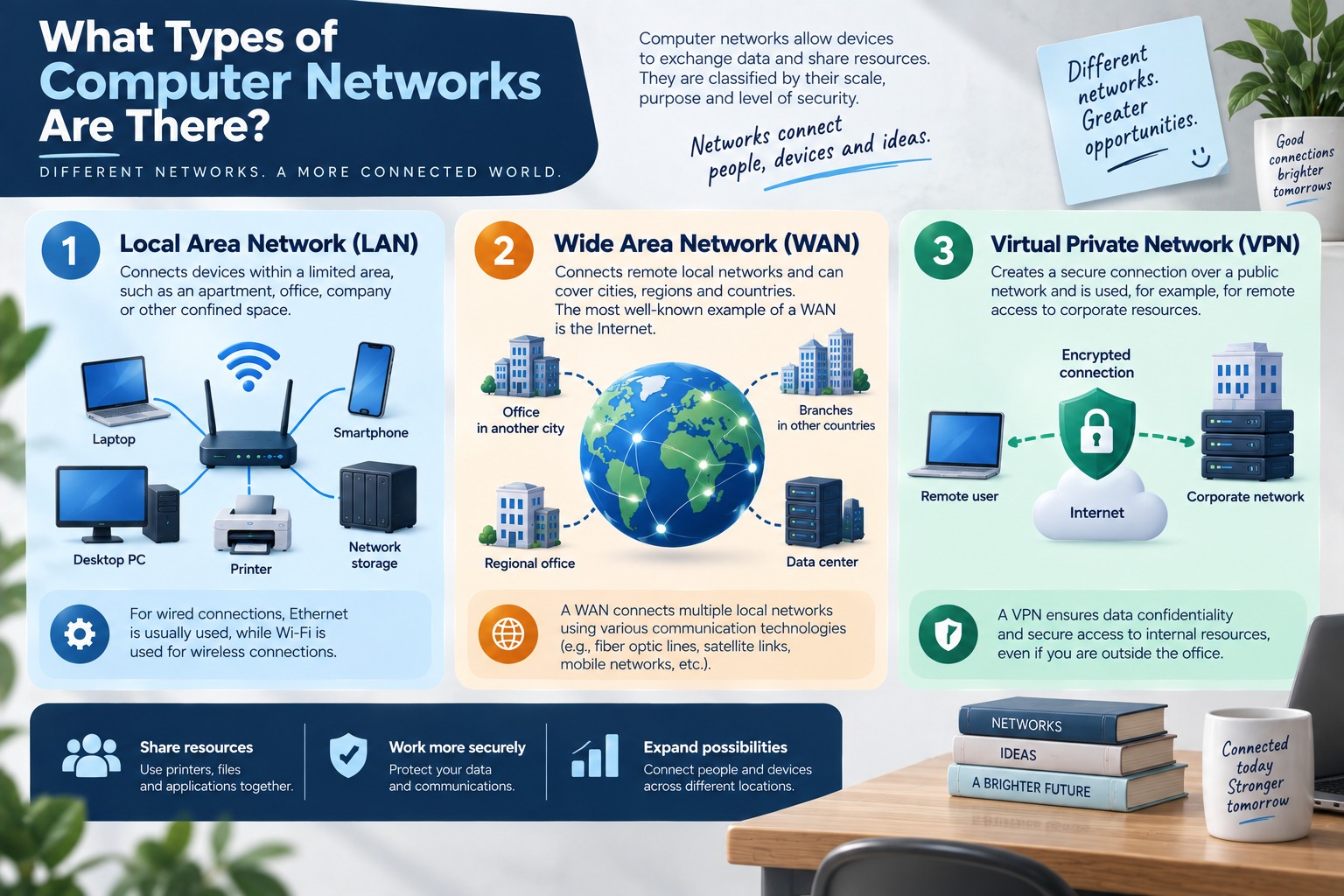
- A local area network (LAN) connects devices within a limited area. This can include a home, office, school, or business site. Ethernet is often used for wired connections. Wi-Fi is commonly used for wireless access.
- A wide area network (WAN) connects networks across larger areas. It can cover cities, regions, or countries. The internet is the best-known example of a WAN.
- A virtual private network (VPN) creates a secure connection over a public network. It is often used for remote access to company systems, cloud services, and private resources.
Why computer networks matter
Computer networks make digital communication possible. Email, messaging, video meetings, remote work, file sharing, and online collaboration all depend on network access.
Networks also allow many resources to be shared. These can include servers, storage systems, printers, databases, and business applications. For companies, this makes systems easier to manage. It also helps provide access to the same services from different offices or locations.
Cloud computing has made network quality even more important. Many applications and files are now stored in remote data centers instead of local computers. As a result, network speed and stability directly affect cloud services. Important factors include bandwidth, latency, connection quality, and reliability.
How data moves across networks
Data moves through networks by following a set of rules called protocols. TCP/IP is the main group of protocols used by the internet and most modern networks.
Each device on an IP network has an address. This address helps identify where data comes from and where it needs to go. Routers move data between different networks. They help choose the path that data takes.
Switches work mainly inside local networks. They connect devices and help send data to the correct destination. DNS is another important part of internet infrastructure. It connects domain names with IP addresses. This allows websites to use names such as example.com instead of long numerical addresses.
Computer network security
Network security becomes more important as more devices and services go online. Common threats include malware, stolen credentials, unauthorized access, data interception, denial-of-service attacks, and software vulnerabilities.
Several tools and methods are used to protect networks. These include firewalls, encryption, multi-factor authentication, network segmentation, access controls, and intrusion detection systems.
Zero Trust security is also becoming more common. This model does not automatically trust a user or device because of its location. Access is checked based on identity, device security, company rules, and connection details. This helps reduce the risk of unauthorized access.
Networks and emerging technologies
New technologies continue to place more pressure on network infrastructure.
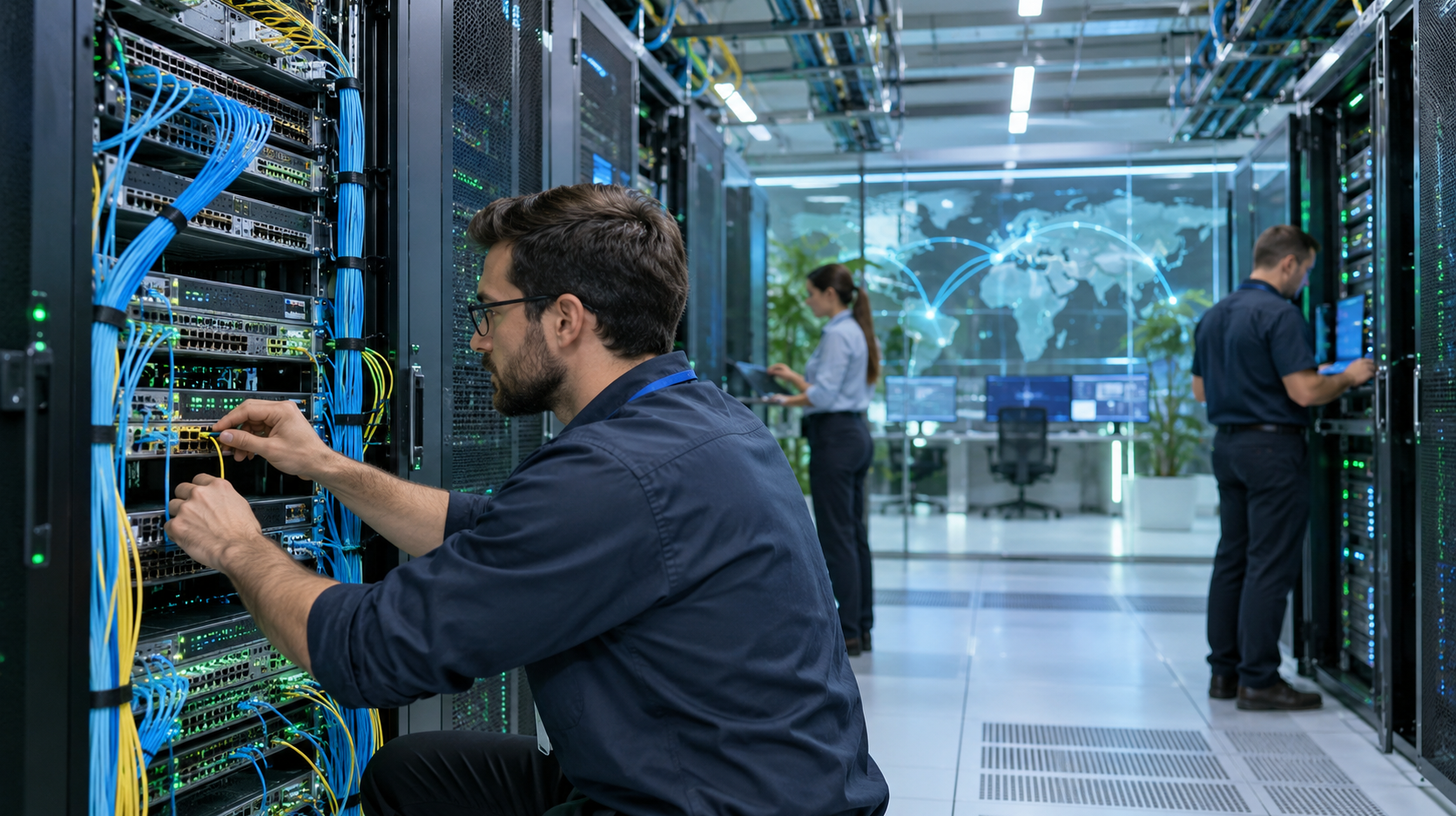
Cloud computing, the Internet of Things, artificial intelligence, and mobile services all depend on reliable network connections.
The number of connected devices is also growing. At the same time, many modern applications need to transfer large amounts of data with very little delay. New Wi-Fi standards, 5G networks, and wider use of IPv6 help support this growth.
Software-defined networking also makes network management more flexible. It allows many parts of a network to be controlled from a central system. Automation can make configuration faster and reduce the amount of manual work required.
Edge computing is becoming important as well. With edge computing, some data is processed close to the place where it is created. This can reduce delays and lower the amount of data sent to remote data centers. It can also improve the performance of systems that need fast responses.
The importance of computer networks
Computer networks are no longer used only to connect a few computers.
Today, they support most digital services. This includes home devices, mobile apps, cloud platforms, business systems, factories, and large data centers.
Future networks will continue to focus on security, automation, higher speeds, and lower latency. More computing tasks will also be distributed between cloud platforms, data centers, and edge devices. Reliable network infrastructure will remain essential for the performance, security, and stability of the digital world.